
Querencia, or, The Trip to Where I'm Coming From
Querencia, or The Trip to Where I’m Coming From
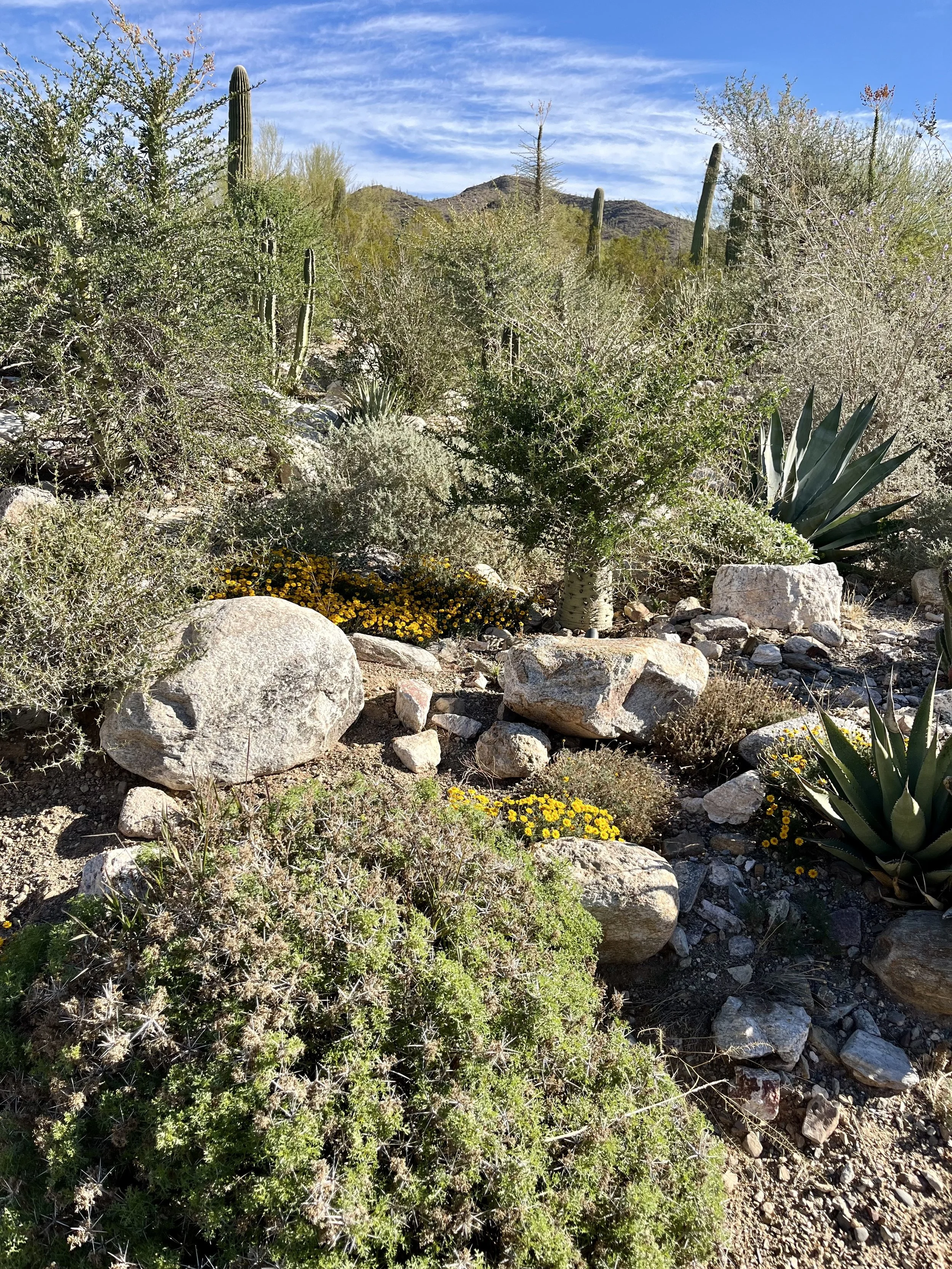
Running these lonesome Arizona roads, from I-40 at Ash Fork, down past Prescott, Phoenix, and Tucson, to the Mexican border at Patagonia, then east along the border, to Bisbee, Rodeo, New Mexico, and up to Las Cruces, is a journey through the past. Desert dawns, sunlit hills, and the miles to go to where I’m going lead me back through seven-plus decades, and through vestiges of bygone selves. I’m out to explore and recapture what of those I can. Some of the changes along the way leave me gasping and exclaiming over someone’s idea of progress, which seems more like blot, blight, and blunder on the landscape to me. Other desert stretches shine with heaven’s light as much as they ever did, comforting body, mind, and spirit.
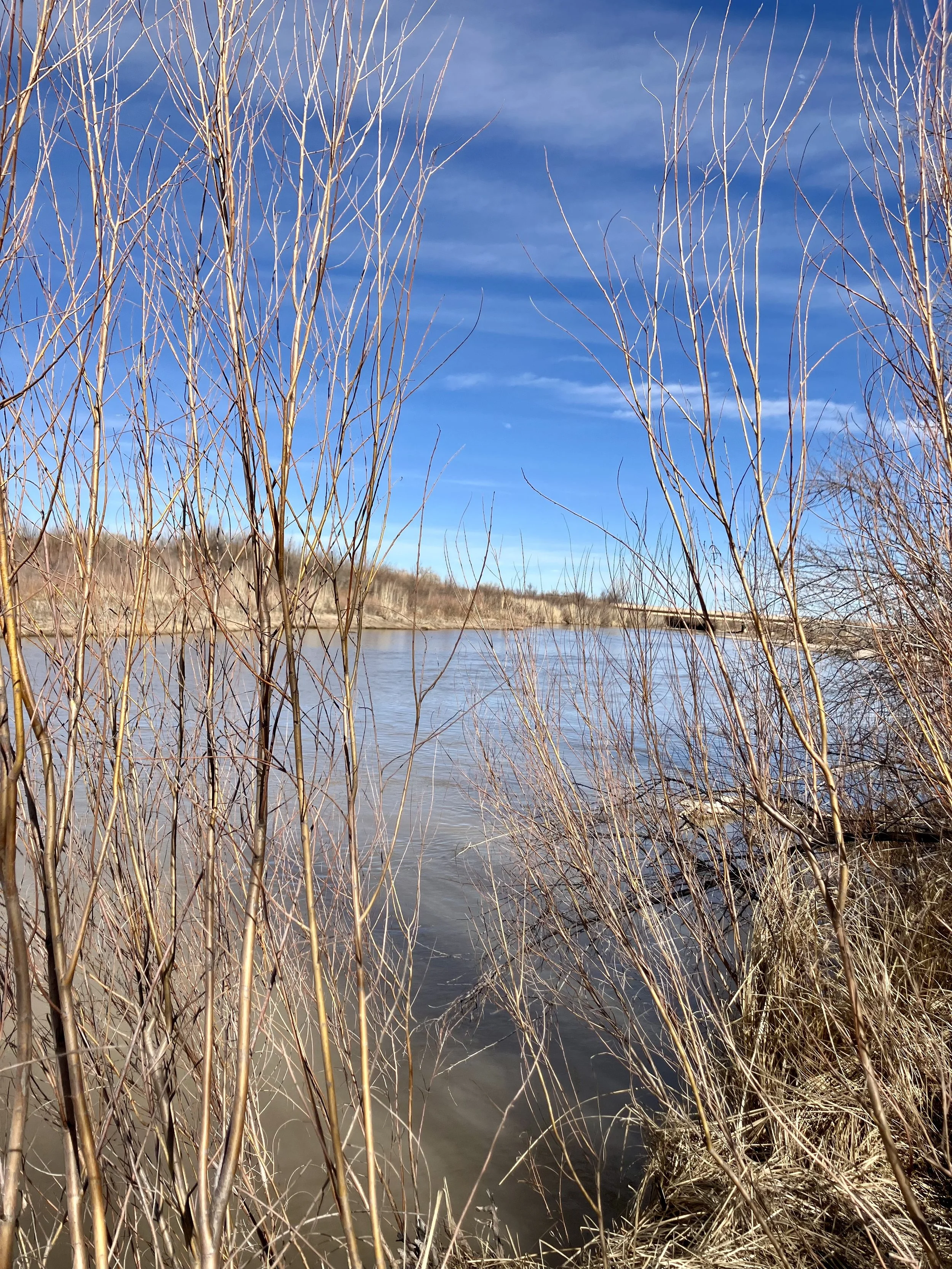
As far back as I go, the inescapable trend in Arizona was always toward more development, less open desert. Yet vast tracts of desert remain as lonesome and forbiddingly beautiful as ever (e.g., the long stretch along the border through Apache country). Vast panoramas contrast harmoniously with the thick cottonwood bosque (Spanish for forest) where I make my home now, in Albuquerque. Urban legs of the trip evoke specific times, people, and events, whereas the remote desert stretches foster meditations into mystic spirit and the common essence of all things.
Places en route evoke experience and perceptions of youth, before I moved to Texas and stayed for thirty years (which is another story, or two). The cities and roadsides, and several houses that I’ll be checking on bring back my youthful aspirations and struggles, trying to find myself and a practical identity, make my way in the world, and keep head above water. I never got onto a firm track forward back then, until I entered the Ph.D. program in Austin, already in my mid-thirties. But my early formative years happened in Arizona, in these towns and along these roads, where earth and sky energize like oxygen in the bloodstream.
I pass beautiful, majestic places, on lonely stretches of desert, far off the main-travelled roads. Those, I believe, somehow correspond to lonely and forbidding reaches of my soul and spirit, which are as real as sun-bleached sand. No wonder I identify so with the arid land; but we are what we are, and should explore what that is, recognize the divinity in it, and make the best we can of it.
My body (as well as mind and spirit) responds positively, viscerally to sky and landscape. I relate this to Kant’s concept of the noumenon (in contrast to the phenomenon), meaning the unobservable, divine essence of material things, expressible at its best as beauty, love, energy, and spirit. I feel a close, affective alignment with some places I’m passing – and endeavor to take some strength from it, like a gift from Emerson’s Oversoul.
The cities, Phoenix, Prescott, Tucson, have entertained (and occasionally beaten up) various versions of me through time; so here I offer them one more – i.e., retired Middle Rio Grande Bosque man, Arizona native gone puro nuevo mexicano; desert rat, living on the bank of the big river. I’m back in search of some lost or forgotten sense or color, and of spiritual nourishment from this desert where my roots go deep.
For two years, now almost fifty years ago (1979-80), I covered a sales territory consisting of Arizona, New Mexico, and El Paso, TX for a college textbook publisher, working from home in Phoenix. That was my first occasion to go tooling around this corner of the U.S. I sold books for classroom adoption, while freely indulging my passions for the southwest and its cultures and literature. I was a free man and got paid decently well, plus expenses, for the work, which I was able to do on my own terms with plenty of free time. I had a tremendous fascination with many of the places, especially in New Mexico, which was then new to me. Santa Fe back then seemed like the center of the universe. I wondered what made the two states, so similar in their physical geography, so distinctive in other ways.
Currently, after ten years of living in New Mexico, Arizona, where I have visited little in recent years, is the less familiar. Though I have run all these roads before, I’m doing it again - for the sheer joy, the scenery, reflections, and for the energy it may supply for meeting challenges up the road.
I’m looking for what traditional New Mexican hispanos call querencia, which refers to places to which one has a very strong personal attachment. It has been defined as “the place which gives us a sense of identity” and “a place from which one’s strength of character is drawn.” Both definitions (from Juan Estevan Arrellano) apply. I have a strong sense of identity tied to the desert and can use all the strength of character I can get. Thus, I’m definitely in search of querencia.
The first day out, I drove from new home in Albuquerque to an old one, in Prescott, AZ; all the long stretch west on I-40, to Ash Fork, an hour past Flagstaff, then south on US 89 through Chino Valley into Prescott. I found Chino Valley greatly and terribly elongated along the highway; so many people and cars, where there formerly were so few!
What do all of these people do out here? Where’s the old truck stop, where we used to go from Prescott for late night coffee? The truck stop was pie, coffee, country music, and an hour of good conversation, now lost to time and progress. But time marches on, and I’m not stopping here; the road leads on to Prescott.
Taking the northwesterly route from the turnoff at Prescott airport, past the old college campus, toward west Gurley Street, I see that Embry-Riddle Aeronautical University has so overbuilt and corporatized the old Prescott College campus that I neglect to drive in, assuming my idyllic memories of it would be broken and buried under the progress. But what memories of youthful awakening lie undimmed beneath the flight school there! I feel a jet of energy just remembering the milestones, acknowledged and unacknowledged, that I and my classmates passed back then. I’m sure I appreciate it more now than I did at the time.
The highway past the old campus is now crowded with new car lots, reeking of chrome and money. Many, I’m sure, consider this progress, but it’s a sad crock of apples from where I sit. This was juniper-studded grassland, on the verge of the Granite Dells rock formations, where now you can get a heck of a deal on a new Hyundai or Kia (any other make and model)!
Several miles further into town, the present Prescott College campus consists of some uniform street-front buildings, indicated by colorful signs. I know little about them, but have to respect the nature and outdoor programs they have spent decades working out. Running a bit counter to concerns of the material world, that kind of work gets too little respect. And they’ve been hanging in with it now for fifty years.
Fifty-five years ago, I attended the old Prescott College, studying anthropology, beer and marijuana, country music, and liberated co-eds, not necessarily in that order. I was on a free-ride, courtesy of my father, and considered it my perfect entitlement to do what I wanted with the opportunity. Fortunately, it turned out to be an intellectually vibrant environment, nurtured by both distinguished faculty and brilliant, motivated students with compatible interests. My close friends there have gone on to very impressive intellectual achievements, studying the desert and its cultures. They made their college interests their life’s work and have created fine, true, even great literature from it.
The old college had fine resources in depth psychology and spirituality, of which I might have taken more advantage than I actually did. At the time, like my friends, I derided those pursuits as lacking objectivity and rigor, and I didn’t discover their subjective value until many years later, when I was already divorced, aging, and in the latter stages of my academic career. All things considered, Prescott College provided a fine education. It might have been even better, had my youthful mind opened more deeply and broadly to all it offered than it was prepared to back then.
Along the way, I picked up intense tastes for shades of country, folk, and rock music. I was a poor, but enthusiastic performer, in dorm rooms and small parties. In a field class in social anthropology, a close buddy and I ended up performing as Los Artistas Internacionales, Tomas y Esteban at the Magdalena, Sonora cockfights. We were drunk and terrible, but also good and brave, I think, for bumbling through the shaggy adventure, which earned us substantial positive notoriety back at school. We imagined we were in a Peckinpah movie, which seemed entirely plausible under the circumstances. The musical interests have stayed with me and grown, from then to now, though the performances remain on the shaggy side.
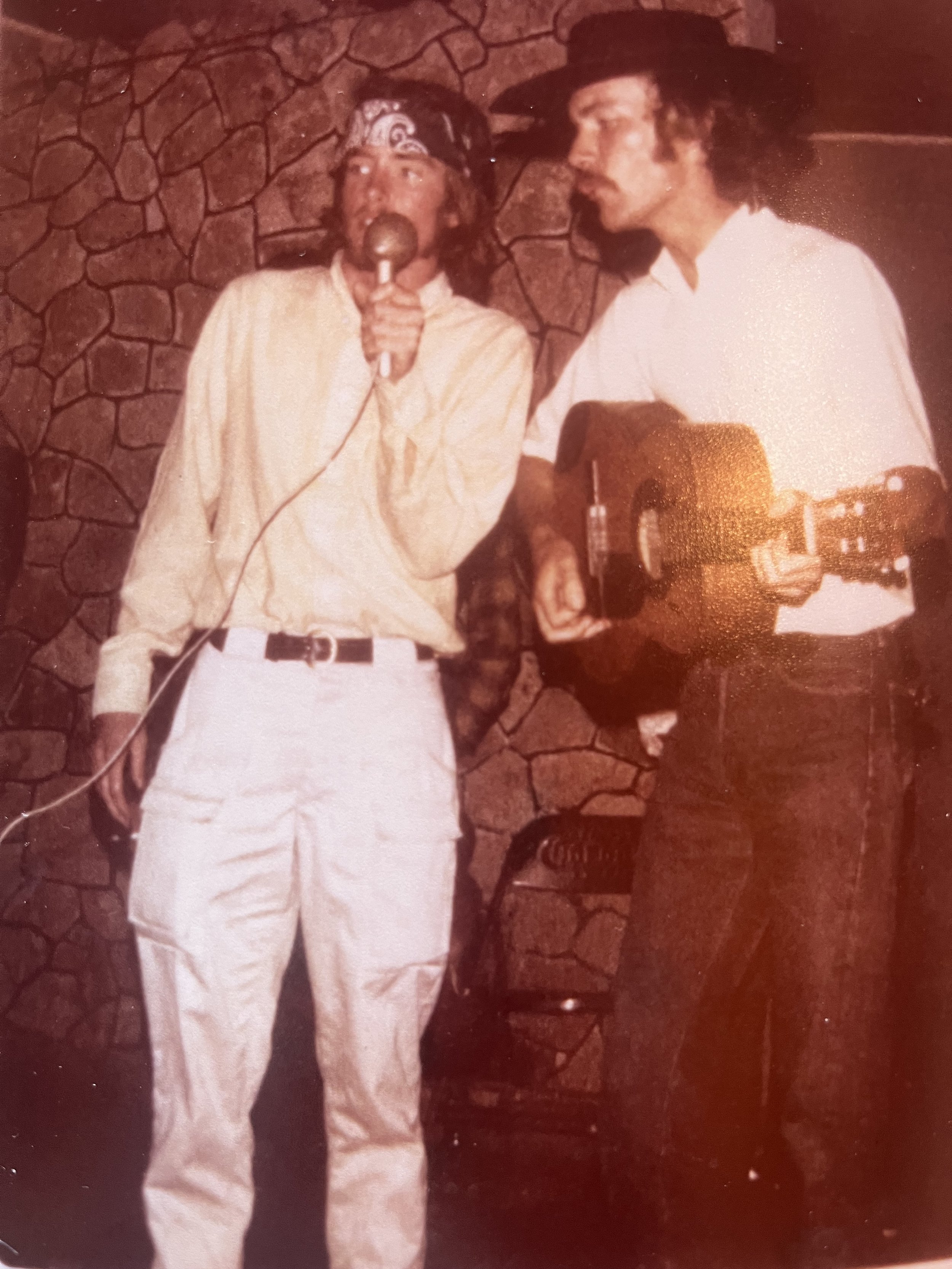
Los artistas internacionales, Tomas y Esteban
My performing partner there in Magdalena, now a leading anthropologist, tells me that that trip was formative in his choice of a life direction. I wouldn’t go that far for myself, but it’s certainly a part of who I am also – Spanish-speaking desert rat and enthusiastic musician who is unlikely to fold in that type of emergent cross-cultural situation. I’ve had deep, rich personal and professional experience in many parts of Latin America over the years since then.
At Prescott College, I spent a summer working in the Mexican American community under Professor Mike Belshaw, an anthropological economist. Mike had an 80-acre ranch northwest of town where he had built himself an exquisite adobe home. I found Mike’s handiwork on the land far more interesting and inspiring than the academic work, although that too was interesting. Building an earthen house, in that majestic setting, lodged in my mind as a shining ideal. I could hardly imagine anything cooler. It was not long after when, with annual sales bonus in hand, I put it down on ten beautiful unimproved acres, on the bank of the San Pedro River, just outside of Benson, Arizona, not far north of where I’ll soon be travelling.
Of all the impractical things I’ve done, that may take the cake. But I did it instinctively, with pride and enthusiasm, and little to no anxiety or apprehension. And I’ve done essentially the same thing, i.e., buying property on impulse, a couple of more times since then. I suppose that suggests that the noumenon of these places has spoken loudly to me, and that the inspiration has outweighed the practicality. But the total experience has always left me stronger, and in a better place under the circumstances, even when the arrangement didn’t ultimately succeed.
Buying the place in Benson felt like a good idea at the time. I could work my two-state sales territory from there, or so I told myself, and surely, being out in that beautiful desert, I would write a southwestern masterpiece or two. But before I could get around to drilling a well, I found it financially expedient to take a book-selling job in Texas, and then was accepted into the Ph.D. program in Austin. Just as I was about to enter the program, an unknown caller, who had looked me up in the county records, expressed a very keen interest in buying the property. Miracles do happen! The monthly payments on their note proved the margin I needed through the program. The episode is illustrative of how this desert can reach out, in an alluring, personal way.
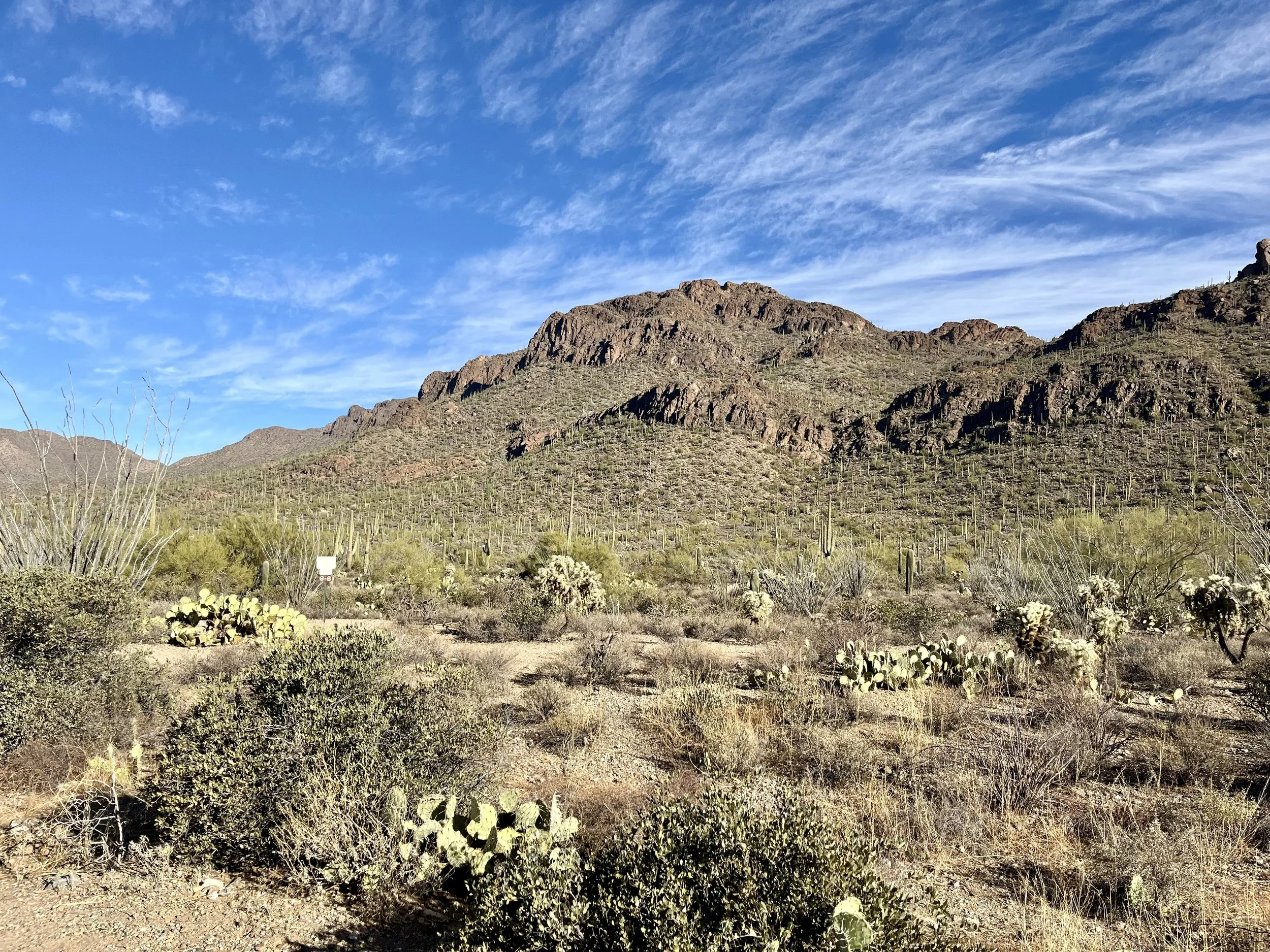
Driving by that property years later, I found that the buyers had used flowing water from their new artesian well to make a swamp of the beautiful desert parcel, and had built a ramshackle plywood house on it. I dismissed this as another appalling land-use mishap; but by then I had my Ph.D. and was a well-published full professor, so I didn’t take it as personally as I might otherwise have. I wrote it off as “just the way things go” and was happy that I got what I needed at the time out of that deal. I found on another subsequent trip that the beautiful desert there, outside of Benson, has been badly wrecked by other trashy development.
The example Belshaw gave of building your own home in nature’s majesty so resonated that I have attempted successive versions of it, in Velarde, Santa Fe, and Albuquerque. True, I didn’t build the homes I’ve enjoyed in these places, as he did his, but no doubt that inspiration was a motive behind my purchases and upgrade projects. It was surely also what whispered “buy now” when I first viewed the house on the bosque nature preserve, here by the Rio Grande.
Prescott itself, once I arrived downtown, was not bustling on a winter Monday evening. I checked into a cramped, uncomfortable room at the classic St. Michaels Hotel, at Palace Avenue and Gurley Street, thinking back to college years and what has grown therefrom, and of my dear mother, who lived and worked in Prescott, flew out from here to distant places to do big things, and owned two fine houses in town.
I found her primary home, on a hillside north of town, with a clear view toward the distant college, airport, and Granite Dells, by using GPS. The house itself was unrecognizable from memory. It was too middle American and ghastly a shade of green to be what used to be a simple ranch house built into the hillside. It looked like someone’s comfortable long-term residence, though, and was well maintained, if not impressively curated. I had a silent word about it with my mother and moved on. I had gotten married for the first time in that house and had other indelible memories that occasioned a flash of querencia, even as I stood gazing at an unrecognizable structure. The old experience there must be the noumenon of the place –its hidden spiritual essence.
After the night at the St. Michaels, bright and early, I drove by my mother’s old Victorian-style house on Gurley Street, just west of downtown. It had formerly, in the distant past, been a sanitorium for tubercular patients, from about 1910. During college, I camped out in it briefly with a simpatico classmate.
The old property appears to be in tip-top shape, now the home of the Chapter 5 Recovery Clinic (reference to Bill W.’s Alcoholics Anonymous). I believe there are also many other recovery clinics in Prescott these days. I don’t know what has made the city a favorite for these institutions, other than maybe the moderate year-round climate. But Chapter 5, which I recall from a visit here ten years ago, has been there at least that long and appears to be a permanent, prosperous fixture in that gracious old house.
Driving to Phoenix, I imagined I was back in my old yellow ’65 Mustang. The road was not as traffic-jammed as expected, outside of some congestion in, of all places, Prescott Valley, the modest exurb now on suburban steroids. I had forgotten the beauty of the Bradshaw Mountains, sloping down toward the valley floor on the other side of the highway.
Just off the highway in northwest Phoenix, I found the house I grew up in. I hardly recognized it from the street. The large old oleander hedge was long gone, so I parked on the street to make sure it was the same place and got out of the car to have a longer, closer look. As I did, a man got out of an old Chevy pickup parked in the driveway and came over to see what was up with me. I told him that I had grown up here, and we began a very cordial twenty-minute conversation about details of the place and its history. He had owned it for twenty-five years, since 2000, and I found him very interested in the previous history of his place.
My parents had bought it 48 years before that, and my dad, a man of the earth, made it his artist’s canvas for many years after. He raised beef cattle, rabbits, turkeys, and gardens, and had built the garage that was still standing and made many major improvements on the house and grounds. I spent all but three years of my time through high school in that house. (We moved to a house a little over a mile away for the other three years.)
A cascade of memories from those years comes down when I put myself back there. So much fundamental, family good; but my parents fell out with each other badly during my high school years and never spoke to each other again afterwards. We all finally got free of that long-lasting turmoil, but it left me fragmented – externally quite normal, but nursing some real relational issues that have played out through life. But at the same time, I feel sure that I’m where I should be.
The flood of memories resolves into a foundation of unqualified love and security from both parents, even though they ultimately came to despise each other and made the house an unpleasant, touchy place to be through my high school years. They show me working hard to be a mediocre athlete, and hardly working to be an award-winning student. Somehow, I’ve come out of it with sturdy trust in myself and my coping resources within my limited sphere, though careful attention is always necessary to keep the thought-stream clean and filtered. Keeping balance in this troubled world demands it.
My true deep roots lie in the next stop, the Greenwood Memorial Cemetery, in an old section of west Phoenix. My father, brother, and paternal grandparents are buried there. I’m greater than myself in their presence, Oversoul presiding. On a visit here 45 years before, I was deeply moved by my brother Calvin’s gravestone. He passed away from polio at age nine in 1954, the same year Jonas Salk discovered the vaccine that eliminated the dread disease. My parents had endured the intolerable loss, and never spoke of it.
Besides the inscription, “Our darling son,” what riveted my attention was seeing his middle name, Price - my father’s name, and his father’s before him. I had not previously known that. I had an idea flash as I stood there, that I could change my middle name, from Paul to Price, thereby honoring both my brother and father, without practically changing my name at all, as I would still be Steven P. Brown.
So, I went to court shortly after and did just that. As simple a legal procedure as that underlies true communion with these souls who have gone before and given me the stuff that makes me who I am. I praise them for their well-lived lives and freely given contributions, and swear I aim to make better use of what they’ve given me.
Later that day, I drove past my mother’s longtime house just off of Mill Avenue in Tempe, on the way to Tucson. The house and neighborhood both looked great, not much changed from the many years that she and all of us around her enjoyed that place. It was a beautiful sight to see, with some beautiful times in her later life there to remember. It was a very special place, perfectly her in its elegant simplicity and comfort, in other words, her querencia.
The next stop, Tucson, where I have a checkered history from fifty-plus years ago, was just a quick overnight stop this time. I had spent a few days there a year before, renewing acquaintance with the very beautiful desert and city. I had made my peace with the rougher aspects of my experience there (traumatic divorce, work issues, competition and conflict with friends) and also had flashes of the excitement of being young and free in that special place. Even so, I concluded that Tucson is not full-blown querencia for me. I went against the grain of my circumstances back then and ultimately found it expedient to leave. My alignment with it is not true and complete.
Yet I feel the surrounding desert keenly, driving through the Santa Rita Mountains at dawn toward Sonoita and Patagonia. This is high, glorious desert at its most exquisite, morning breeze at its most energizing, light almost as divine as in New Mexico. I just need to come down here bright and early to see, breathe, set foot in Patagonia, stop at the store in Sonoita, and head on down the road toward Bisbee and the state line. Then, the richer for having come, I’m down the road and gone.
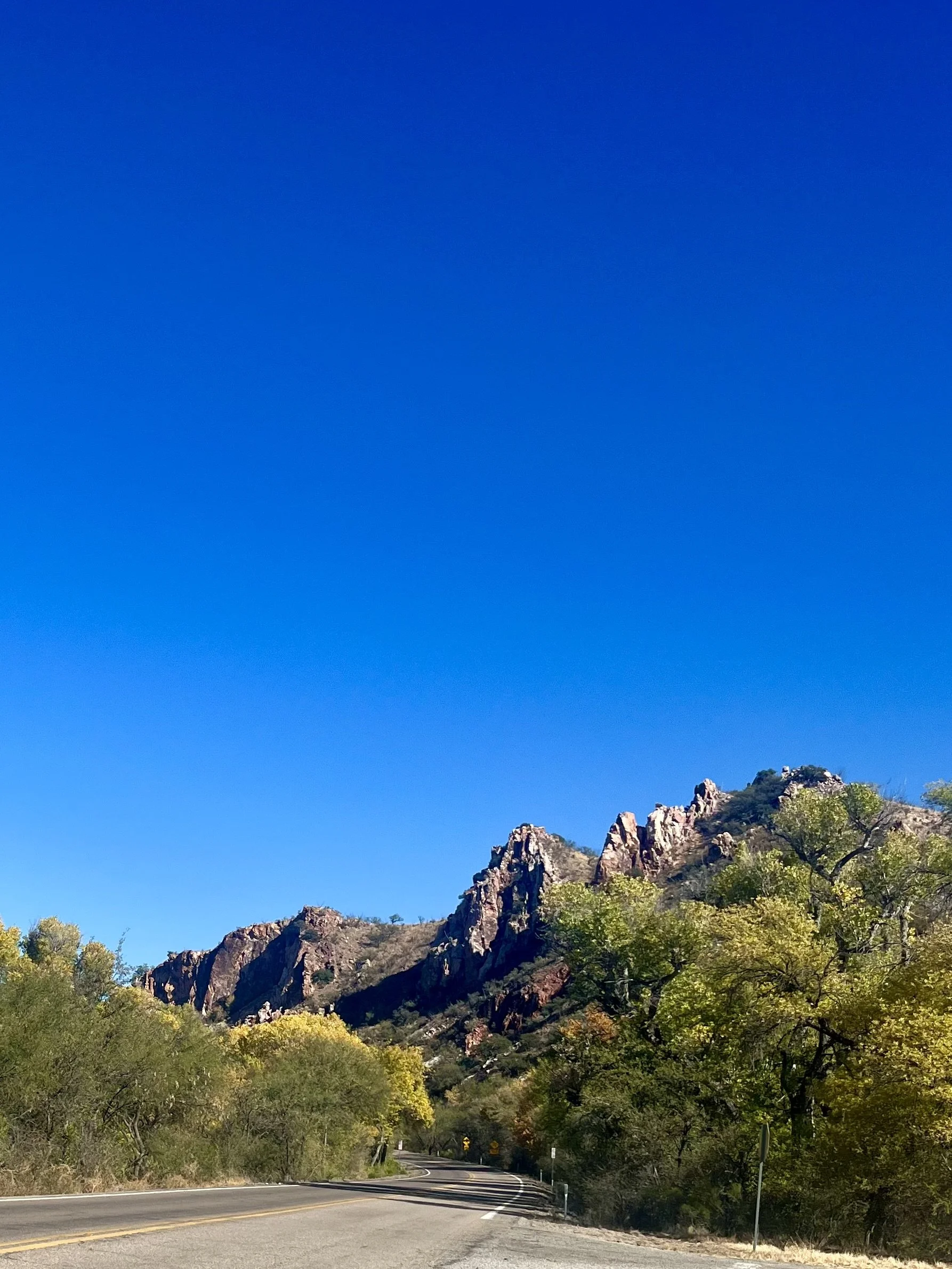
Long stretches of desert highway along ridges and bluffs of the Chiricahua Mountains lead toward the old copper-mining town turned counter-culture outpost of Bisbee. What had at its best been a welcoming hippie haven was very quiet and a bit run down. I stopped at the old classic Copper Queen Hotel, craving an omelet. The hotel was open, but there wasn’t a person to be seen, no one behind the desk, and the restaurant was closed. I found the restroom open, however, and then carried on toward the Mexican border and state line.
I finally found the omelet I couldn’t get at the Copper Queen at the diner in Rodeo, New Mexico, a dot on the map on the New Mexico side of the Chiricahuas. Local society, grizzled owners of nearby ranchettes, was well represented and very sociable. A short distance up from the café sits the Chiricahua Desert Museum, which consists of room after room of nothing but lizards and rattlesnakes. It’s an impressive museum, if you go in for that kind of thing, but I found the well-stocked gift shop more interesting and attractive. Next to the Desert Museum sits the Apache Museum, which is beautiful and respectful of the area, its natives, and wildlife.
I concluded the trip with a pleasant but uneventful stop in Las Cruces and then headed up I-25 back home to Albuquerque. It was a short and simple trip that took me back to where I come from (i.e., where I was born and raised) and also to where I’m coming from (i.e., where my soul, spirit, and imagination lie). This mobile introspection has been salubrious; and Arizona is still in me. But it’s sure good to get home to New Mexico, where my long trail has led, querencia!
